
Evia
Greece's second-largest island runs long and green beside the mainland, an easy escape of thermal spas, wild mountains, ancient cities and empty beaches that foreign visitors still overlook.
About the region
The great island hiding in plain sight
Evia, known in antiquity as Euboea, is the second-largest of the Greek islands after Crete, a long ribbon of land stretching some 180 kilometres down the eastern flank of central Greece. For all its size it remains one of the country's least touristed corners, in part because it barely feels like an island at all: at Chalkida, its capital, only the narrow Euripus strait separates it from the mainland, crossed by a small bridge over waters famous for a tidal current that reverses several times a day.
The island divides naturally into distinct characters. The green, mountainous north is a land of pine forest, olive groves and thermal springs, home to the grand old spa town of Edipsos and picturesque villages such as Limni, and still recovering from the great wildfires of 2021. The centre rises to Mount Dirfys, the island's highest peak, above Chalkida and the ancient city of Eretria. The south narrows into a wild, windswept tail beneath Mount Ochi, all long beaches, ancient marble quarries and mysterious prehistoric dragon houses around Karystos and Marmari. On the east coast, Kymi looks out over the open Aegean and offers the only ferry to Skyros.
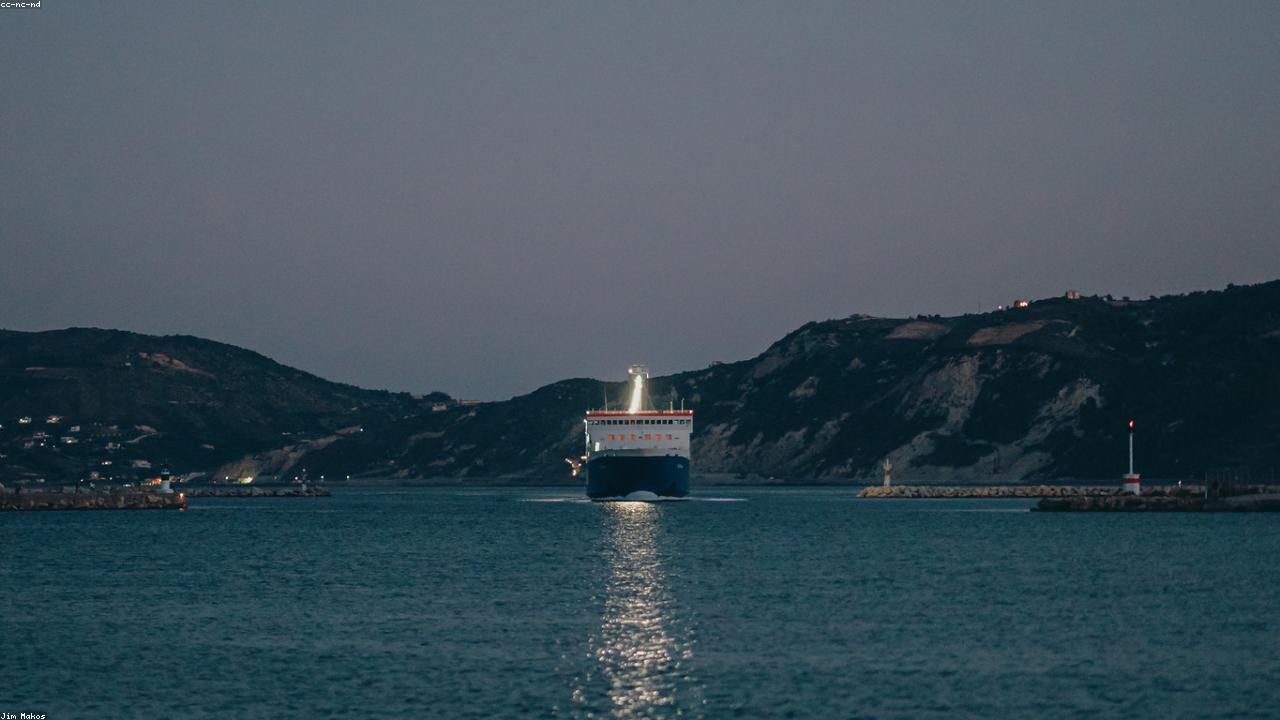
Travellers use Evia as a slower, more authentic alternative to the busy Cyclades, and its accessibility is a large part of the appeal. It is reached by road bridge from Athens or by a handful of short car ferries from mainland ports such as Rafina, Oropos, Arkitsa and Glyfa, so much of the island lies within a two- to three-hour reach of the capital. That makes it as suited to a long weekend as to a leisurely week-long tour by car.
Come for thermal baths and forest drives in the north, ancient stones and seafood in the centre, and mountains, wind and open sand in the south, all on an island that still moves at its own unhurried pace.
The islands
Where to go on Evia
On the map